



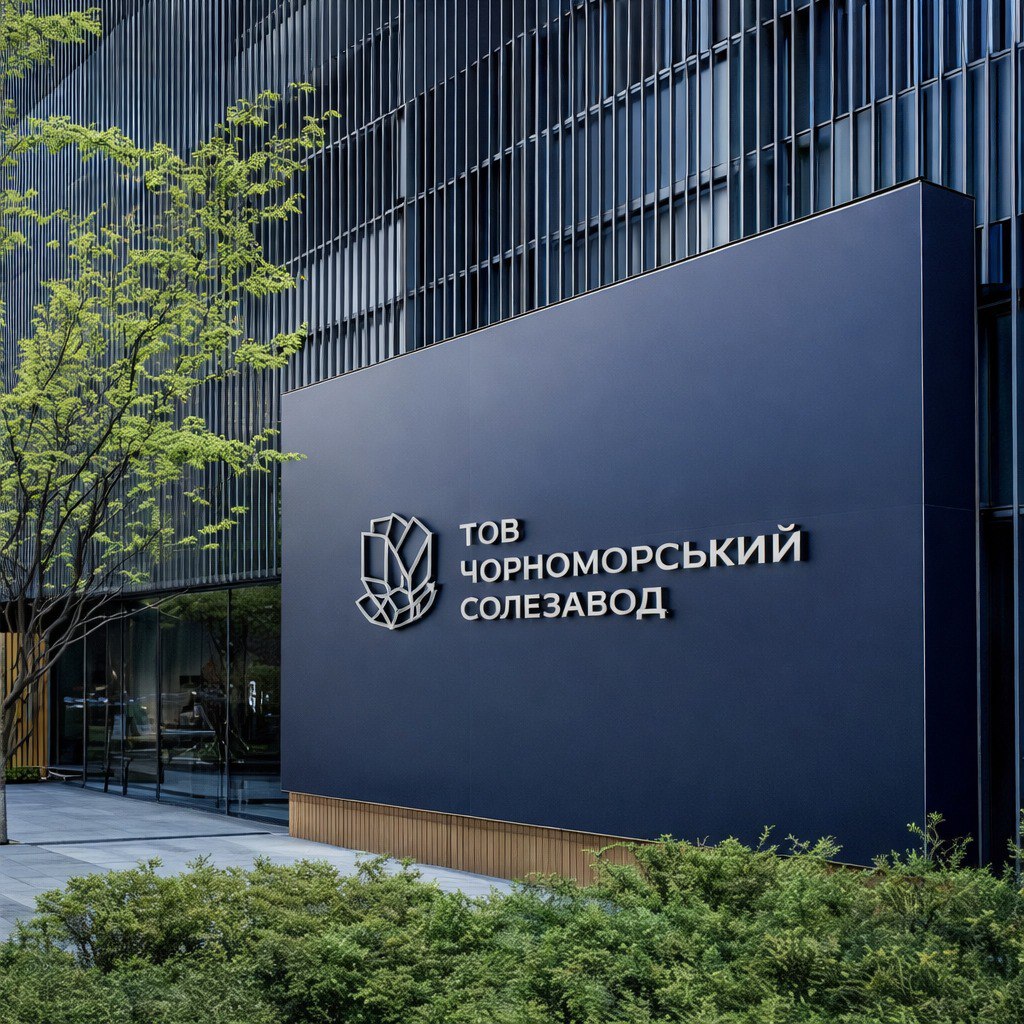
As early as the beginning of 2026, a strategic enterprise for the production of food-grade and industrial salt will begin operations in the Odesa region. The new salt plant will not only meet half of Ukraine’s salt demand but will also contribute to the restoration of the Kuyalnik Estuary by collecting excess salt from the body of water.
Domestic Salt Production in Ukraine
The country’s only large-scale salt producer—Artemsil—is located in a temporarily occupied territory. As a result, Ukraine is forced to import a large portion of its salt. That is why Black Sea Salt Plant LLC is building a facility to produce food-grade and industrial salt in the Odesa region.
Construction of the salt plant began in 2024 and is now in its final stages: the facility is projected to begin operations in January 2026. The plant will produce 15,000 metric tons of salt per month—enough to cover more than 50% of Ukraine’s market demand.
“With the help of specialists from ‘Artemsol’ and the Turkish company SALT PLUS, we are creating Ukraine’s first industrial-scale salt production plant, which will utilize innovative integrated technologies. Salt processing will include several stages of deep purification, grinding, and a unique drying method that prevents the product from caking,” explained Vitaliy Rudenko, the company’s co-founder.
The project received an investment of $2.8 million, raised through the “5-7-9%” program. The new Ukrainian production facility will not only supply the domestic market with this strategic product but also attract investment to the region and create jobs. The company will also contribute to the restoration of the Kuyalnik Estuary.
“We see our role not only in salt production but also in the restoration of Kuyalnik. If we can remove the excess salt and restore the estuary’s natural balance—we will do so. This is our responsibility to the region and the country,” notes Vitaliy Rudenko.
Global Experience in Saving the Kuyalnik Estuary
The Kuyalnik Estuary is a natural gem and a resort of national importance. However, its salinity level has recently risen to critical levels: it exceeds the natural norm by several times, threatening the unique therapeutic mud deposits.
Therefore, Oleksandr Shestun, director of the “Kuyalnik” National Nature Park, initiated the involvement of specialized technologists and salt producers to halt the degradation of the body of water.
The Black Sea Salt Plant and the Kuyalnik National Nature Park have signed a memorandum of strategic partnership. The park is already mapping out its territory and, together with the plant’s specialists, is developing a solution that will reduce the estuary’s salinity without using public funds.
“It is important to us that this project not only preserves a unique ecosystem but also creates jobs, supports veterans, and develops the region. The park isn’t spending any money—on the contrary, it will generate revenue and attract partners,” notes Oleksandr Shestun.
To reduce the estuary’s salinity, one of the most effective methods will be used: basin precipitation of excess salts. This is a globally recognized technology used by the U.S., Spain, Turkey, and other countries.
Here’s how it will work:
during hot weather, the salinity level in Kuyalnik exceeds 300 parts per thousand;
to preserve the mud and restore it, this level must be reduced to 180–250 promille;
excess salt will be collected in special basins after it settles and processed at the plant.Thus, Black Sea Salt Plant LLC is becoming the technological partner for removing excess salt, while Kuyalnik State Enterprise is serving as the environmental coordinator and scientific supervisor of the process.
“For us, this is a matter of national environmental security. Reducing salinity is the only way to preserve the value of therapeutic mud. We initiated this decision and are pleased to have a strong technological partner,” notes Oleksandr Shestun.